M6 MacBook Pro keeps its $1,999 price, but base 16GB misses faster memory
The 14-inch MacBook Pro gets M6, Wi-Fi 7 and 24-hour battery claims; pre-orders open today, shipping November 6.
Hardware · Macfolio · 28 October 2026
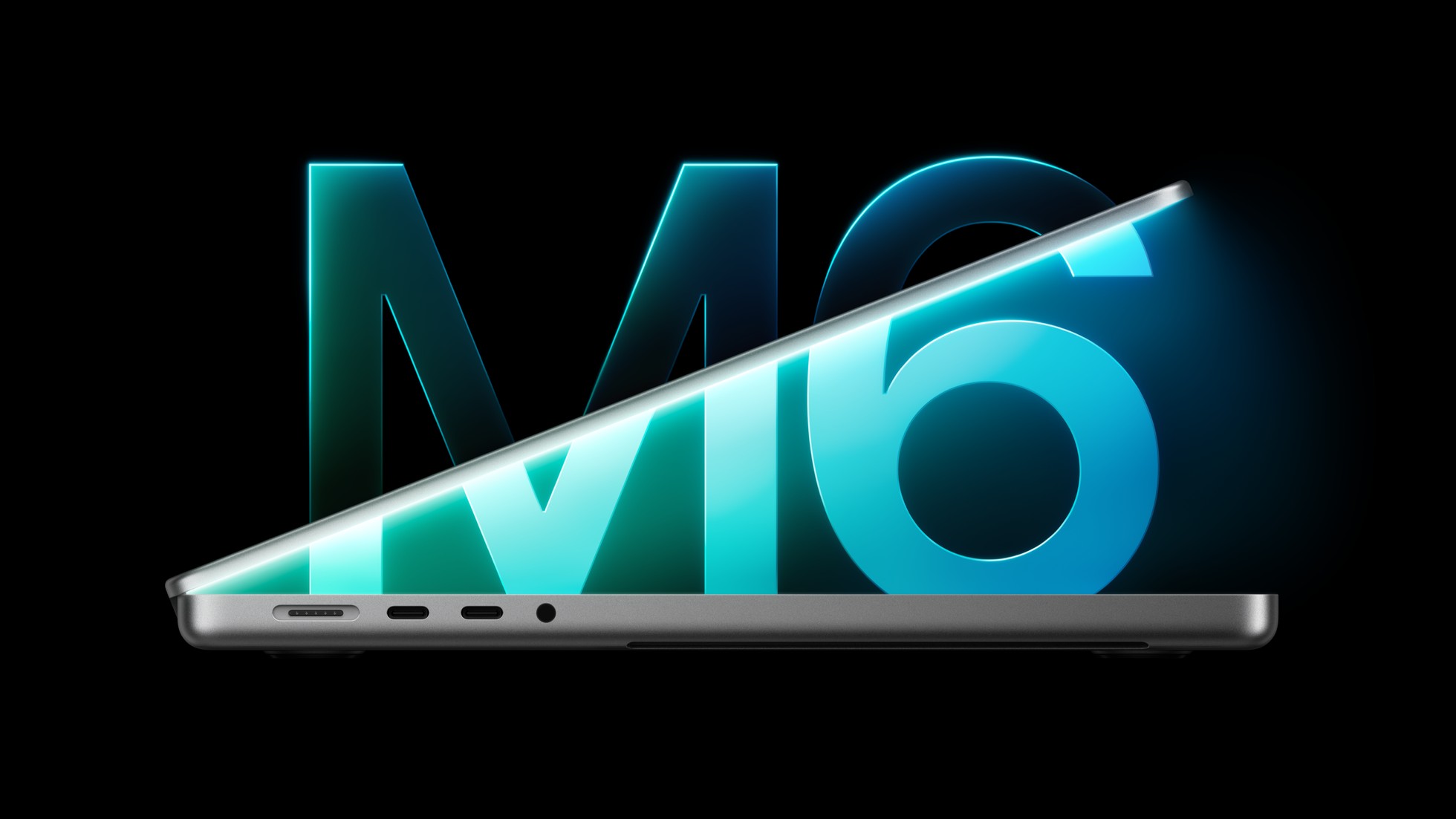
Apple announced a new 14-inch MacBook Pro with the M6 chip on October 27, 2026. Pre-orders open today, October 28, in 35 countries and regions, and the first units arrive in customers' hands and stores on Friday, November 6. The U.S. starting price is $1,999, or $1,899 with education pricing, the same as the M5 model it replaces after Apple's June price increase.
What changes inside
The design, display, and port layout carry over. The changes are in the chip and wireless hardware:
- M6 has a 12-core CPU (2 super cores, 4 performance cores, 6 efficiency cores) and a 12-core GPU, two more of each than M5.
- Apple claims up to 30 percent faster graphics and up to 25 percent faster on-device AI work than M5, and up to 1.3x faster Xcode builds.
- Wi-Fi 7 and Bluetooth 6 replace Wi-Fi 6E and Bluetooth 5.3.
- Battery life is rated at up to 24 hours of video streaming, which Apple calls the longest ever in a Mac.
The base model ships with 16GB of memory and a 1TB SSD, configurable up to 32GB and 4TB. Ports remain three Thunderbolt 4, HDMI, SDXC, MagSafe 3, and a headphone jack, with up to two external displays.
The memory caveat
Apple's spec page lists 170GB/s of memory bandwidth only for the 24GB and 32GB configurations. The 16GB base model stays at 153GB/s, the same figure as M5. If you run local language models or large builds, the memory upgrade buys both capacity and bandwidth.
Who should upgrade
Owners of Intel or M1 MacBook Pros get the biggest jump, plus more memory and an extra Thunderbolt port. M4 and M5 owners are looking at a modest step. This launch does not mean the larger Pro models are done for the year: Apple is widely expected to show more Macs at today's event, and we will cover only what it confirms.
Our take: a sensible spec refresh at an unchanged price, but the $1,999 entry point is now $300 above where it sat before June, and the base memory still limits AI work.
Caveats: all performance figures are Apple's own claims from its October 2026 testing. We have not tested the machine.