Touchscreen MacBook Pro brings OLED and a Dynamic Island, but M5 chips
Apple's first touch Mac adds a tandem OLED panel and lighter body from $2,899, with the same chips as in March.
Hardware · Macfolio · 29 October 2026
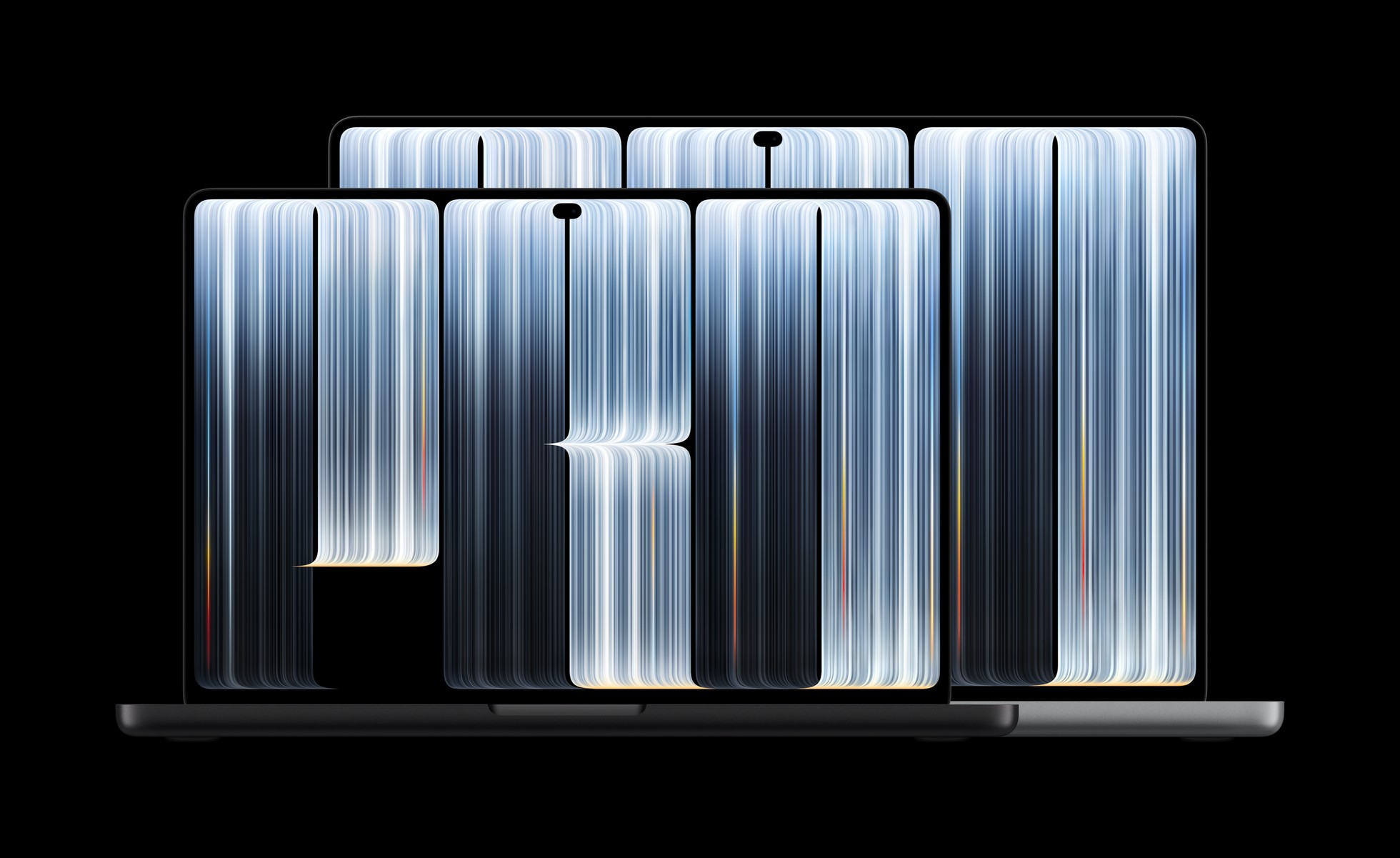
Apple announced the MacBook Pro with PROLED XDR Display on October 28, 2026, its first Mac with a touchscreen. Pre-orders are open in 30 countries and regions, and deliveries and in-store availability begin Friday, November 6. U.S. pricing starts at $2,899 for the 14-inch model with M5 Pro and $3,399 for the 16-inch, rising to $4,499 and $4,799 with M5 Max.
What is new
The headline is the display: a tandem OLED panel with up to 2000 nits peak HDR and SDR brightness, a 10,000,000:1 contrast ratio, 10Hz to 120Hz ProMotion, and both P3 and Adobe RGB color. The touch sensor is built into the panel, macOS translates touches into clicks for apps that have not been updated, and a Dynamic Island replaces the notch as the home for Spotlight, Live Activities and Siri AI.
- Weight drops to 3.0 pounds (14-inch) and 4.0 pounds (16-inch).
- Screens grow slightly to 14.2 and 16.3 inches.
- Storage now goes up to 16TB on M5 Max; memory still tops out at 128GB.
- Three Thunderbolt 5 ports, HDMI, SDXC, MagSafe 3, Wi-Fi 7 and Bluetooth 6.
What did not change
The chips are the same M5 Pro and M5 Max that Apple introduced in March, so raw performance should match the mini-LED MacBook Pro, which stays on sale alongside the new model and the M6 14-inch. Apple's spec page rates battery life at up to 22 hours for the 14-inch with M5 Pro and up to 24 hours for the 16-inch, the same figures as the mini-LED models. Spotlight only moves into the Dynamic Island when Siri AI is enabled, and several third-party touch apps Apple named, including Microsoft Office and Adobe Lightroom, are listed as coming later this year.
Who should care
Photographers, colorists and designers who need Adobe RGB or a brighter reference display on the road get the most from this. If your work is code, documents or spreadsheets, the mini-LED model with the same chip is cheaper and not slower. This launch does not mean touch is coming to every Mac; it is limited to these two models for now.
Our take: a genuine display upgrade and a lighter chassis, but paying a premium for last spring's chips makes this a display purchase, not a performance one.
Caveats: brightness, battery and display figures are Apple's claims from its own September 2026 testing. We have not used the machine, and long-term OLED behavior on a laptop running static desktop interfaces is still unproven.