Meta Muse Spark Open runs on Mac Studio with Apple MLX
Meta ships Muse Spark Open weights tuned for dual M5 Ultra Mac Studio clusters via Apple MLX.
Workspace · Macfolio · 16 October 2026
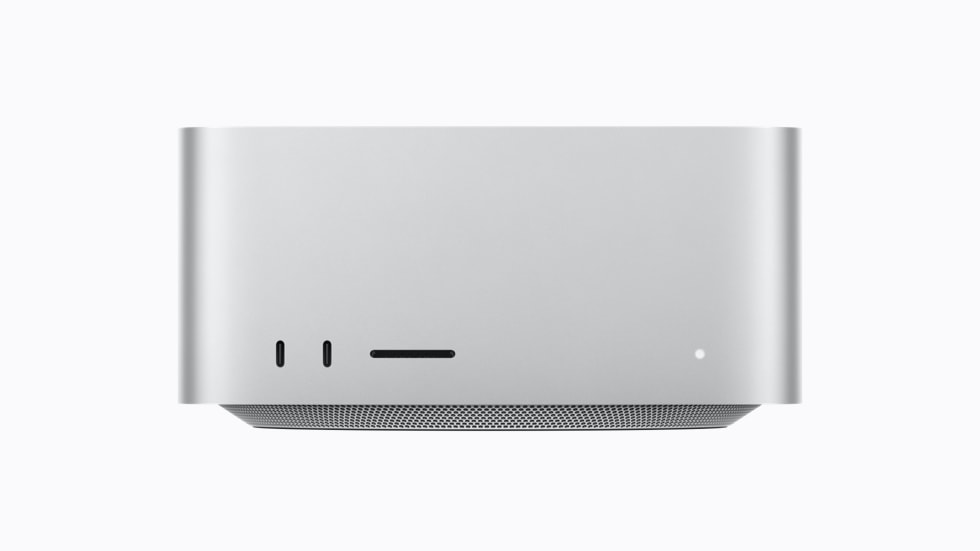
Meta released Muse Spark Open on October 15, and Apple published a matching Machine Learning Research post the same day on running it with MLX on Mac Studio. The open-weight model is natively multimodal, with 816 billion total parameters, 42 billion active, and a 1 million-token context window. Meta positions it for coding and agentic desktop work. The Mac angle is not a vague also-runs-on-Mac note: Meta says two M5 Ultra Mac Studios with the latest MLX can hold the full model in unified memory, and Apple's post benchmarks decode speed across two and four Mac Studio setups.
What Apple and Meta confirmed
Apple's October 15 MLX distributed-inference write-up focuses on Mac Studio with M5 Ultra, RDMA over Thunderbolt, and MLX LM. Reported decode speeds for Muse Spark Open at an 8,192-token context include about 15.7 tokens per second on a two-Studio pipeline setup, about 24.9 on two-Studio tensor parallel, and about 36.7 on four-Studio tensor parallel. Meta's blog matches the hardware story: up to 512 GB unified memory per Studio, 1.2 TB/s memory bandwidth, and two Studios acting as roughly a terabyte of shared memory for the weights. John Ternus publicly congratulated Meta on the Mac Studio efficiency claim the same day.
- Model: Muse Spark Open, open weights on Hugging Face and several cloud model gardens
- Hardware bar Meta cites: two M5 Ultra Mac Studios with current MLX
- Apple framework: MLX / MLX LM, with RDMA clustering for multi-Studio runs
- Example on-device tests Meta describes: iOS app changes in Muse Code, DaVinci Resolve footage review
- Availability: weights and APIs listed October 15; this is not an App Store download
Who this is for, and what it is not
This does not mean every Mac can load an 816B-class model, or that Apple is shipping Muse as a consumer feature in macOS. Single MacBook or Mac mini configs are outside Meta's two-Studio recipe. Cloud API endpoints Meta lists are separate from local MLX inference. If you do not already run local models on Apple silicon, nothing on your desk changes until you install MLX tooling and procure eligible hardware.
Our take: for Mac-centered AI and engineering teams, October 15 is a concrete MLX and Mac Studio proof point, not a mass-market Siri story. Budget for two high-memory Studios before treating desktop Muse Spark as practical, and verify token rates on your own cluster rather than marketing charts alone.
Apple's research page is the better primary for cluster numbers; Meta's blog is the better primary for model size and licensing.